I wanted to focus this blog on a form of art that had an emphasis on cultural values and I think that the Japanese tea ceremonies reflect well on this. This ceremony is still an important part of Japanese culture and it is a tradition that goes back to the sixteenth century. A common element in the pottery created is Wabi, which is finding beauty in imperfection and it is seen in many of the pieces used for this ceremony.
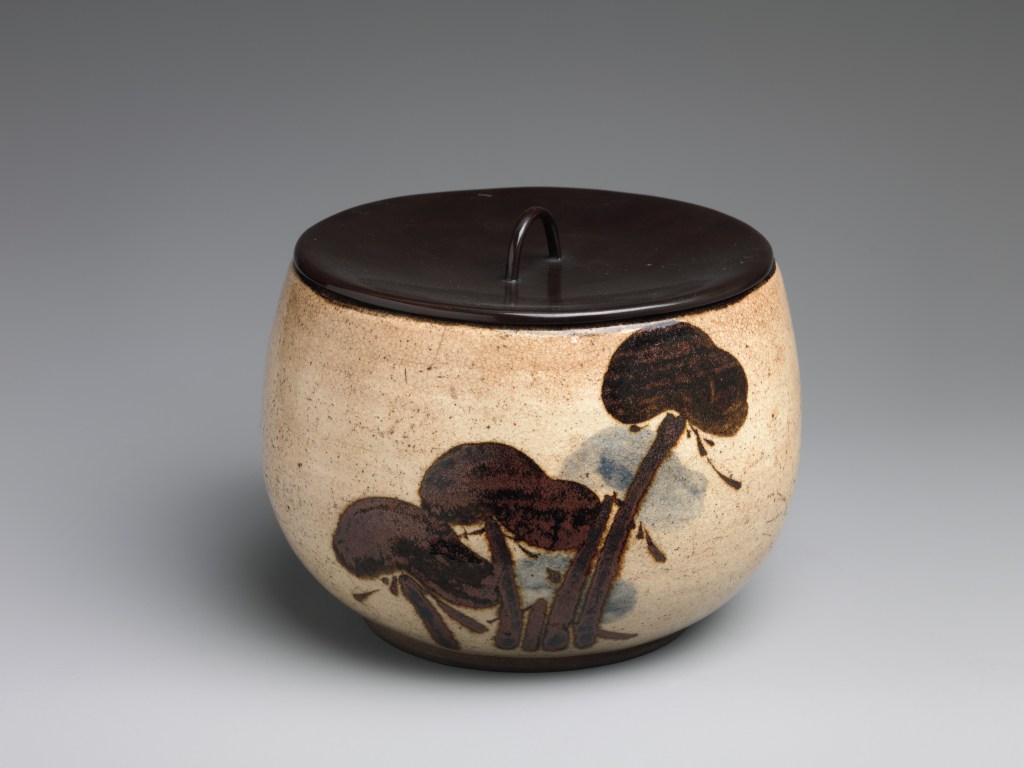
This jar would be used to hold fresh water for rinsing the tea cups and for refilling the kettle. The jar has a white background with a lid that has a black glaze, creating a really nice contrast. There are pine trees featured on the pot painted a with a black glaze. I really like this piece and I think that the contrasting elements are really beautiful and I would definitely want to use this piece in a ceremony. I think that the trees are a really nice peaceful element that brings nature into the core of this piece. Very fitting for a peaceful ceremony.
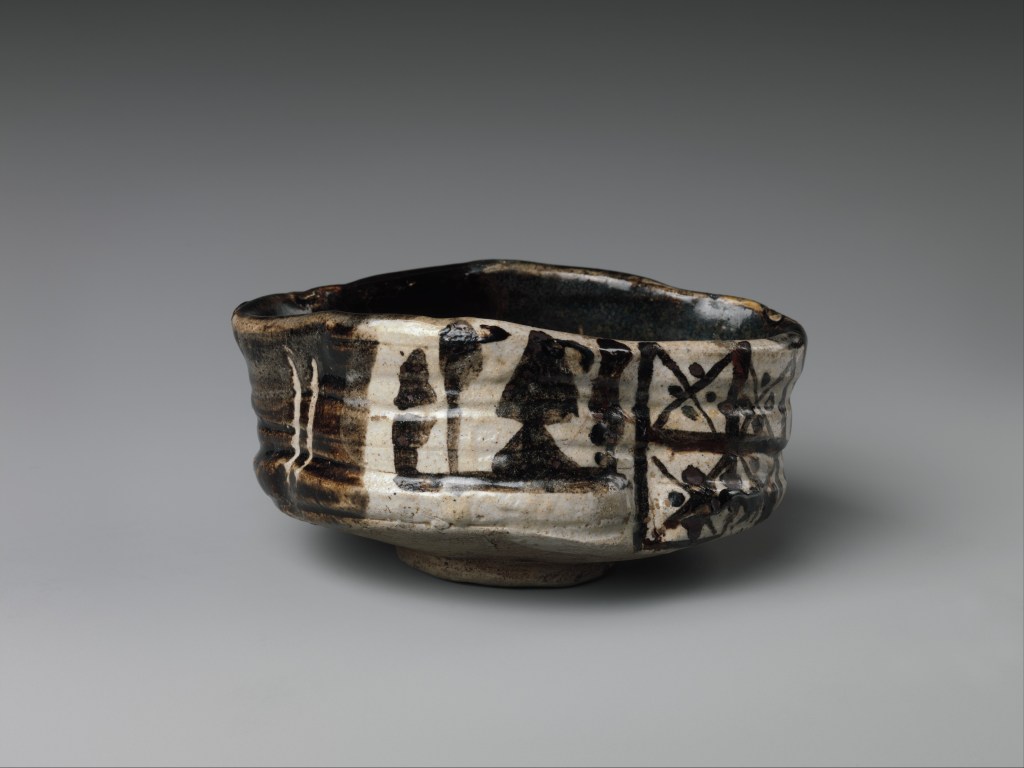
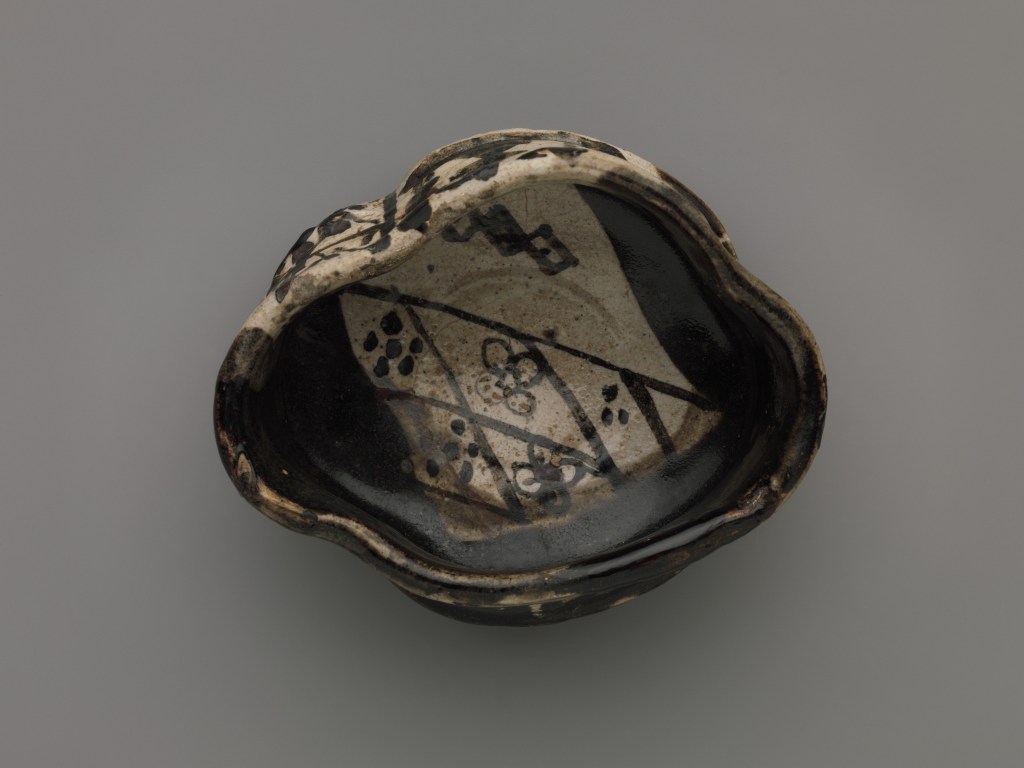
This is a tea bowl which is used to mix the matcha powder used in the ceremony. This bowl really shows off the Wabi style. This bowl looks like it was made out of coiled clay but, it was likely thrown on the wheel and then intentionally dented and made imperfect. I think that the organic nature of this bowl is what makes it so attractive. The form of the bowl being paired with the beautiful design really makes it a gorgeous piece and I would also love to see this being used in a ceremony.
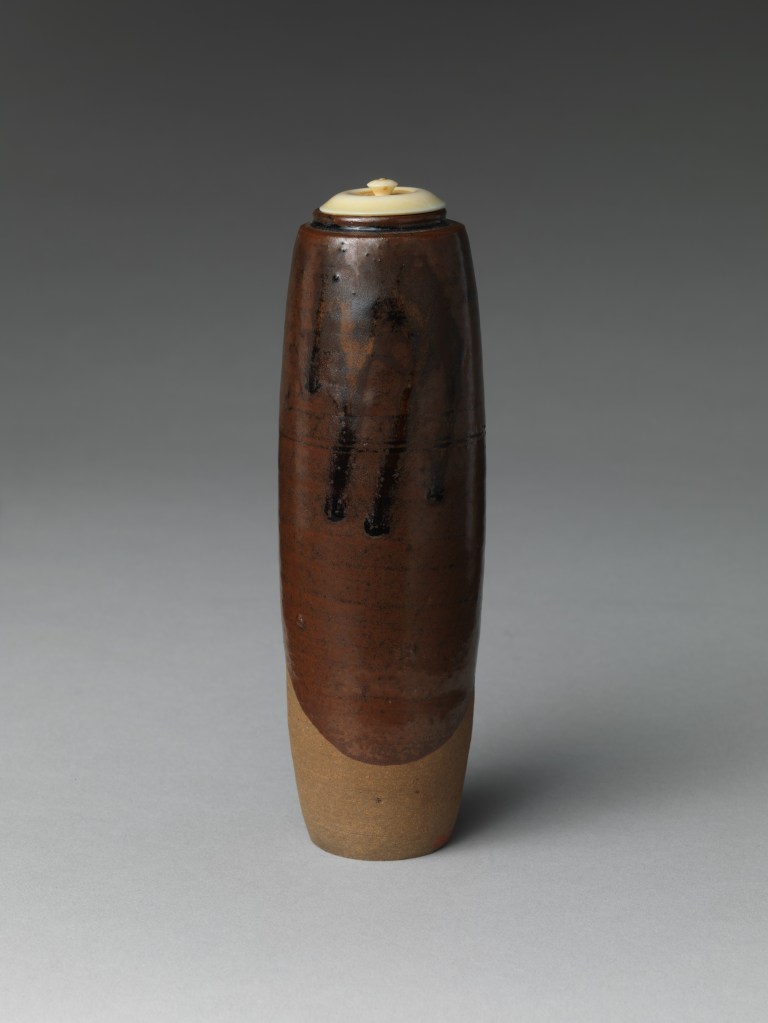
This is a tea caddy that was used to hold the matcha powder used in the tea ceremonies. This particular one was created by Nonomura Ninsei who was a prominent ceramics artist is the 17th century. He was known for merging the old traditional techniques with high heat firing. He is also regarded as the father of kyo-yaki and is well know for his colorful designs. I think this work is really beautiful and I love the contrast between the lid and the rest of the jar. As with the other pieces I would love to see this piece in use.
Citations
Metmuseum.org, http://www.metmuseum.org/toah/hd/jtea/hd_jtea.htm.
Metmuseum.org, http://www.metmuseum.org/art/collection/search/53832.
Metmuseum.org, http://www.metmuseum.org/art/collection/search/52514.
Metmuseum.org, http://www.metmuseum.org/art/collection/search/49282.
Ninsei Nonomura, Kyoto Artist, Kyo-Yaki, March 2004 Japan Times Story by Robert Yellin, http://www.e-yakimono.net/html/ninsei-nonomura-04-jt.html.
 Phoenix's Art 200x Blog